

1,000 Days of War: New Analysis Reveals Scale of Humanitarian Shortfall in Gaza


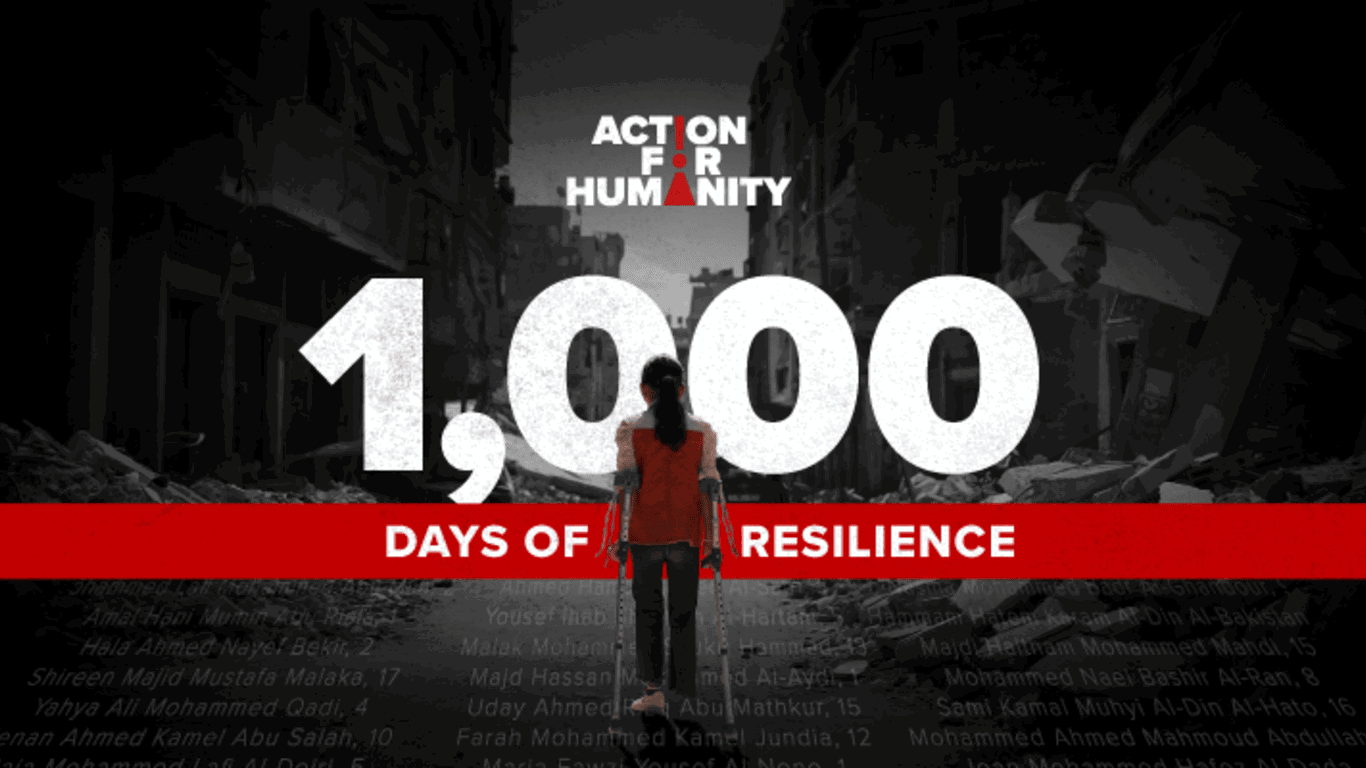
For the past 1,000 days, the humanitarian system in Gaza has been forced to operate amid the destruction of the very infrastructure it depends on. Throughout Israel’s military campaign, hospitals have been bombed and rendered inoperable, schools have become displacement shelters instead of places of learning, and roads that once connected communities have become de-facto frontlines.
In a crisis that has killed over 70,000 people, the basic conditions for civilian life have been steadily dismantled.
Against this backdrop, the amount of humanitarian assistance actually reaching people in Gaza has remained persistently and structurally below minimum survival levels.
“THE WAR HASN'T JUST DESTROYED BUILDINGS; THE WAR IS DESTROYING THE FUTURE OF AN ENTIRE GENERATION.”
AFH Field Team Member, Palestine
Analysing Humanitarian Aid Movements
Guidance from UN OCHA and the WHO indicates that even under a ceasefire scenario, around 600 trucks per day entering Gaza is considered a minimum target. This includes 350 commercial goods trucks, 150 UN and INGO supply trucks, and 100 Red Crescent or bilateral assistance trucks. This means that the 150-humanitarian truck benchmark should not be considered a target for recovery or normal life. It is the minimum level of humanitarian assistance required in this emergency.
Action For Humanity has analysed humanitarian truck movements into Gaza over a 1,000-day period (8 October 2023–3 July 2026), using UN OCHA reporting and the UN 2720 Mechanism (a UN-established system that coordinates, verifies, tracks and facilitates the clearance of humanitarian aid shipments into Gaza to improve transparency, prioritisation and delivery to civilians) data. At the time of analysis, and due to the frequency with which data is released, publicly available records covered 995 of those 1,000 days, ending with the update on 28 June 2026.
Across this period, an average of 76 humanitarian aid trucks entered Gaza each day. This is around half of the minimum humanitarian benchmark of 150. On 87% of days (869), aid volumes fell below this threshold. There were more days in which no aid entered Gaza than days in which the minimum threshold was met.
It is important to note that these figures measure trucks once they have entered Gaza, not whether aid ultimately reached families. Delays, damaged infrastructure, movement restrictions and operational constraints mean the amount of assistance reaching civilians is often significantly lower than entry figures alone suggest.
“WHEN WE TALK ABOUT A THOUSAND DAYS OF WAR, WE ARE TALKING ABOUT A CRISIS OF THIRST AND CONTAMINATION AND ALL OF THIS IS MERCILESS.”
AFH Field Team Member, Palestine
A System Under Massive Pressure
At least 1.6 million people (77 per cent of the population) are facing high levels of acute food insecurity, with Gaza Governorate experiencing a five-month famine from August 2025. Water production in Gaza has fallen dramatically to around 40% of pre-October 2023 levels, leaving only around six litres per person per day. This is not only far below the WHO’s recommended minimum of 15 litres per person per day, but also below the absolute survival threshold of 7.5 litres per person per day used in emergency planning.
Nearly one million people live in tents, while another 52,000 households live in overcrowded shelters. Thousands more are sleeping outdoors. In June 2026, an estimated 850,000 people lacked basic emergency shelter materials. The health system has been severely degraded, with only around 2,000 hospital beds remaining operational compared to 3,500 before the conflict, and fewer than half of hospitals functioning even partially.
Taken together, these conditions do not represent separate humanitarian sectors in crisis, but a single system under sustained breakdown, where the inability to deliver sufficient aid consistently translates directly into mass deprivation across every essential need.
What Must Happen Next
Under international humanitarian law, humanitarian access is both a legal obligation and operational prerequisite for protecting civilians. Yet the persistent restriction of aid flows, combined with widespread infrastructure destruction, has resulted in a situation where humanitarian actors cannot meet even minimum survival needs at scale.
What is urgently needed is for Israel to immediately remove restrictions that prevent humanitarian aid from reaching civilians at the scale required, alongside a sustained increase in humanitarian assistance from donors and the wider international community.
Together, these steps must prioritise consistent entry of aid at scale, safe and reliable distribution inside Gaza, and the restoration of conditions that allow civilians to access food, water, medicine and shelter through functioning systems rather than emergency relief alone.
Share Article
