



Out of Sight, Out of Mind, Out of Time: New AFH Report Reveals Yemen's International Attention Crisis


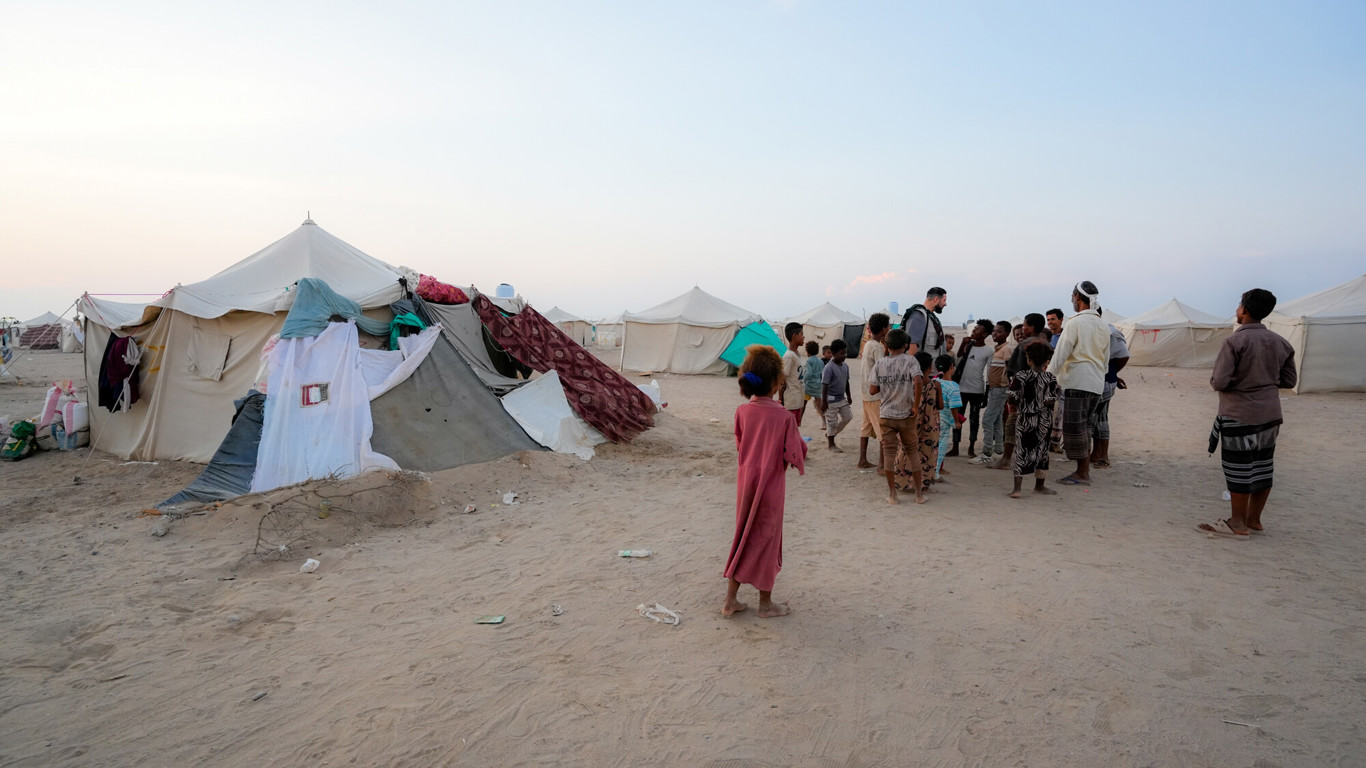
New research from Action For Humanity reveals how Yemen's humanitarian crisis is being overlooked by international media and political institutions, despite millions of people continuing to face hunger, displacement and declining access to essential services.
Yemen's humanitarian crisis has endured for more than a decade, leaving millions of people facing hunger, displacement and severely weakened public services. Yet despite the scale of humanitarian need, the country continues to receive remarkably little international attention.
Now, a new report published by Action For Humanity reveals the extent to which Yemen has been marginalised in international news coverage and political debate, raising urgent questions about the consequences of a humanitarian crisis being left out of the global conversation.
Out of Sight, Out of Mind, Out of Time: The Yemen Attention Index examines media coverage, public search interest and parliamentary attention to Yemen between January 2025 and October 2026, comparing the findings with Gaza, Sudan and Ukraine.
The research identifies a consistent pattern of limited media visibility, predominantly security-focused reporting and insufficient political scrutiny, at a time when Yemen's humanitarian response faces a severe funding shortfall.
Yemen Receives Just 1.7% of UK Media Attention
The Yemen Attention Index analysed selected influential news outlets across the United Kingdom, United States, Canada and four European countries, examining how frequently Yemen appeared in headlines compared with Gaza, Sudan and Ukraine.
In the UK, Yemen accounted for just 1.7% of headlines explicitly naming one of the four crises examined. The figure was similarly low in other media markets, with Yemen representing 3.1% of the measured coverage in the United States, 4.4% in Canada and 2.2% across the selected European outlets.
Across every media market studied, Gaza and Ukraine received substantially more explicit headline coverage than Yemen. In the UK alone, Gaza appeared in approximately 24 times as many headlines, while Ukraine appeared in more than 30 times as many.
These findings do not suggest that other humanitarian crises deserve less attention. Rather, they expose the difficulties faced by prolonged emergencies in maintaining international visibility, particularly when they receive limited coverage outside periods of military escalation.
Yemen's Humanitarian Crisis Is Being Overshadowed by Security Reporting
Beyond the volume of coverage, the report examined how Yemen is represented when it does appear in international news. Of 48 Yemen-related articles assessed through harmonised human coding, 66.7% were primarily focused on military and security developments, while just 8.3% were predominantly humanitarian in their framing.
Coverage frequently centred on Houthi activity, missile attacks, Red Sea shipping and regional security, with comparatively little emphasis on the experiences of communities affected by prolonged conflict.
While these security developments have significant international implications and warrant reporting, the findings highlight the risks of allowing them to dominate public understanding of an entire country.
The research also identified a significant gap in how Yemen is named in news headlines. Of 220 usable Yemen-linked headlines examined, 47.7% did not explicitly name the country, instead referring to Yemeni people, armed actors or a combination of these.
This distinction matters because audiences may repeatedly encounter reporting about threats to international shipping or regional security without developing a broader understanding of the humanitarian crisis affecting millions of people across Yemen.
For families struggling to access food, healthcare and safe drinking water, the consequences of prolonged conflict extend far beyond the military developments that dominate international reporting.
Yemen Receives Minimal Attention in Parliament
The report also found that Yemen consistently received the smallest share of measured parliamentary attention across the four crises examined, including in the UK Parliament, US Congress, European Parliament and Canadian House of Commons.
In the UK, Yemen accounted for just 1.84% of the parliamentary attention measured during the research period. Gaza was referenced approximately 19 times as often, Sudan nearly eight times as often and Ukraine more than 26 times as often.
The research also found that only one dedicated UK parliamentary debate title explicitly named Yemen, compared with 44 for Gaza, 35 for Sudan and 60 for Ukraine.
Parliamentary scrutiny is an important mechanism for holding governments accountable for humanitarian funding, diplomatic engagement and civilian protection. When a crisis receives limited sustained attention, there are fewer opportunities to question government decisions, examine commitments and demand action.
The findings therefore raise concerns about whether Yemen is receiving the political engagement necessary to address both the immediate humanitarian emergency and the underlying causes of prolonged instability.
A Humanitarian Crisis Facing a Severe Funding Shortfall
Yemen's limited international visibility comes at a time when humanitarian organisations are struggling to secure the resources needed to sustain essential services.
According to the report, Yemen's 2025 humanitarian response required $2.48 billion but received just $703 million, leaving the response only 28.4% funded.
The shortfall has contributed to reductions and suspensions of critical humanitarian services, limiting the assistance available to communities already facing severe hardship. Official reporting also indicated that only around half of the people targeted by the humanitarian response were reached.
Although the Yemen Attention Index does not establish a direct causal relationship between limited media coverage and funding shortages, it highlights how sustained international attention can influence the conditions in which humanitarian assistance is mobilised.
When a crisis receives little coverage, members of the public have fewer opportunities to understand its consequences or contribute to humanitarian appeals. Similarly, limited political debate can reduce the pressure on governments to explain funding decisions and demonstrate progress towards resolving the conflict.
The report argues that Yemen's international attention deficit is therefore more than a communications challenge. It is part of a wider environment in which humanitarian needs can remain insufficiently addressed.
Action For Humanity Calls for Renewed International Commitment
In response to its findings, Action For Humanity is calling for greater international engagement with Yemen's humanitarian crisis, including sustained media coverage, increased humanitarian funding and renewed diplomatic efforts towards a lasting political resolution.
The report urges donor governments, including the United Kingdom, to protect and increase funding for Yemen, with greater emphasis on predictable, multi-year commitments that allow humanitarian organisations to plan and maintain essential services.
It also calls on parliamentary institutions to strengthen scrutiny of government funding and diplomatic policies, while encouraging media organisations to report more consistently on the humanitarian consequences of the conflict.
Crucially, the research emphasises the importance of placing Yemeni voices and experiences at the centre of international reporting, ensuring that communities are represented beyond the military and geopolitical developments affecting the country.
For Action For Humanity, which continues to deliver humanitarian programmes in Yemen, the findings reinforce the importance of sustained international engagement that responds to the needs and priorities of affected communities.
Yemen Cannot Afford to Be Forgotten
Yemen's humanitarian crisis has not disappeared. Millions of people continue to face the consequences of prolonged conflict, displacement and inadequate access to essential services, while the resources available to support them remain severely limited.
The Yemen Attention Index demonstrates that the challenge extends beyond the number of headlines or parliamentary debates devoted to the country. What matters is whether international attention translates into greater understanding, political accountability, humanitarian funding and meaningful efforts towards peace.
The report makes clear that Yemen should not become an international priority only when developments threaten shipping routes, regional security or the interests of other countries.
The people of Yemen deserve sustained international attention, meaningful political action and the humanitarian support needed to rebuild their lives.
Read the full report: Out of Sight, Out of Mind, Out of Time – The Yemen Attention Index.
Share Article
