



The Illusion of Localisation: How $146 Million in Syria Bypassed Local Actors Again
Nihad Sarmini, Head of Business Development & Partnerships at Action For Humanity


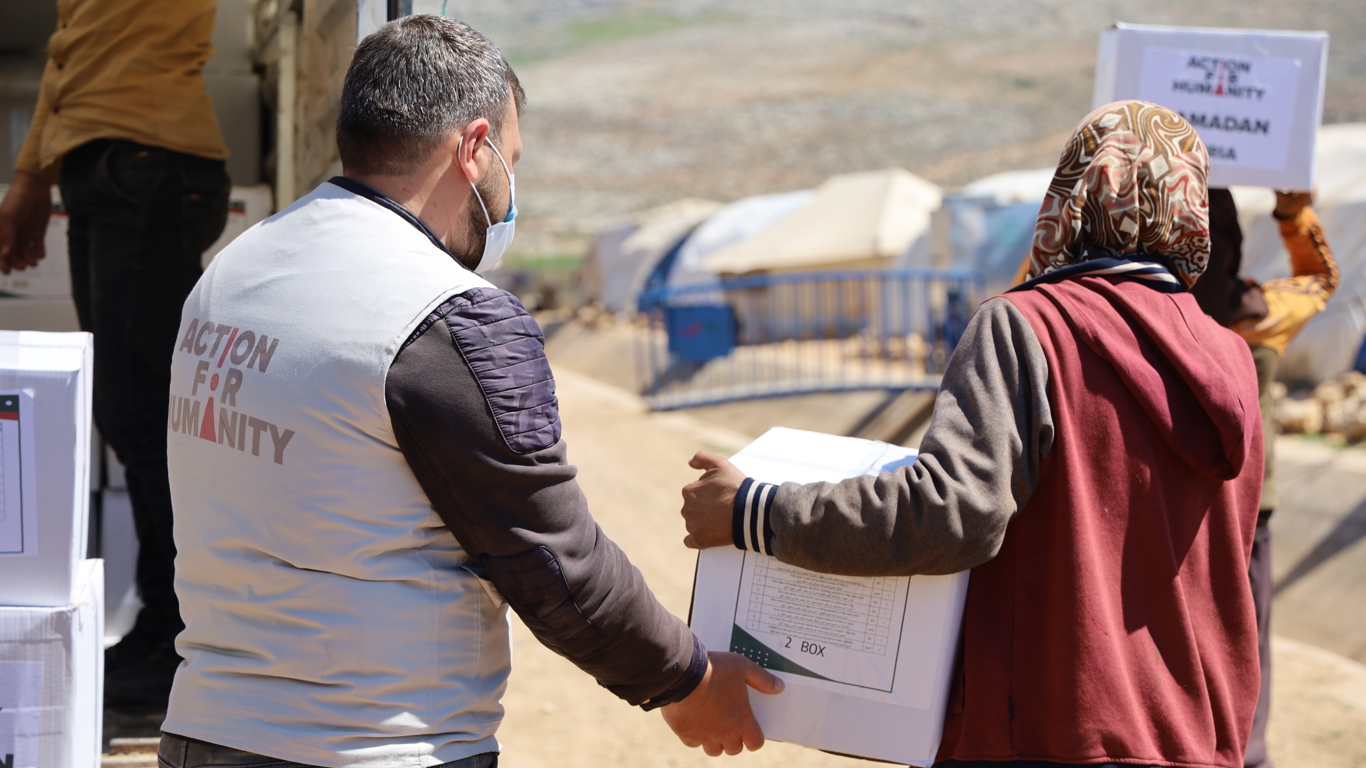
The latest reserve allocation from the Syria Humanitarian Fund (SHF), intended to deliver urgent, life-saving assistance, directs all funding to 17 international actors, a mix of UN agencies and large international NGOs. More than 56% is allocated to UN bodies such as WFP, UNHCR, and UNICEF, with the remaining 43% going to organisations including CARE, NRC, and others.
Not a single Syrian organisation appears as a direct recipient, despite many being vetted, eligible, and already operating within pooled fund mechanisms.
For a crisis now in its second decade, this is not a marginal oversight. It reflects how the system continues to operate.
On paper, the allocation aligns with stated priorities: rapid response, coordinated delivery, and the broader “humanitarian reset.” It targets millions of people in high-severity areas and mobilises substantial resources at a critical moment.
But the way those resources are distributed tells a very different story. Localisation remains largely rhetorical. Funding continues to flow through international organisations, while Syrian actors with more than 15 years of operational experience, frontline access, and established delivery capacity are positioned as implementers rather than recipients.
Which presents the main issue with this allocation: if local organisations are trusted to deliver, why are they not trusted to receive funding directly?
International agencies often present themselves as necessary intermediaries, able to manage compliance requirements, absorb risk, and deliver at scale. In many cases, they do add value. But each additional layer carries real costs: headquarters overheads, regional structures, compliance systems, and programme support charges.
By the time funding is transferred through multiple intermediaries, a substantial share has already been absorbed. Even conservative estimates suggest that between 25% and 50% is lost along this chain. How much of that $146 million ultimately reaches communities? Allocation through traditional streams is not about capacity; it is about control and a structurally ingrained lack of trust.
This is not because it is impossible. We have already seen models that work.
The Syria Cross-Border Humanitarian Fund has channelled significant funding to Syrian NGOs, demonstrating that pooled funds can support local actors at scale rather than routing resources exclusively through international intermediaries. In 2023, the Aid Fund for Northern Syria allocated 75% of its funding to Syrian NGOs and set out a localisation strategy explicitly designed to shift power, resources, and decision-making closer to local actors. These are not symbolic adjustments. They are operational examples of what localisation looks like when local actors are treated as recipients, partners, and governance stakeholders rather than only downstream implementers.
What makes these models instructive is that pooled funds can combine scale, accountability, and local access when localisation is built into the fund’s design. AFNS is particularly relevant because its localisation strategy was not an add-on to an otherwise unchanged system; it informed partner selection, allocation logic, and the role of Syrian organisations in the response. That matters because it shows the issue is not whether more direct funding to local actors is feasible. It is whether the architecture is designed to permit it. The evidence is already there: direct funding to local actors has been done, and it can be replicated. Which makes the complete absence of Syrian organisations in a $146 million allocation not a capacity constraint, but a choice.
Syria exposes the limits of this model. After more than 15 years of crisis, local civil society has developed the experience and systems required to manage significant funding. Many organisations have already delivered programmes at scale under the same pooled mechanisms that now exclude them.
Yet when substantial funding is mobilised, they are bypassed while international organisations continue to receive the bulk of resources.
Allocation criteria such as scale, speed, and absorption capacity consistently favour large international actors. The outcome is a closed funding loop, where the same organisations receive funding repeatedly while local actors remain dependent on sub-grants, delayed disbursements, and reduced overheads.
At a time when global humanitarian funding is under pressure, this matters. The Humanitarian Reset has already been described as an effort to improve the efficiency and effectiveness of the aid system, yet commentators have warned it risks failing to deliver meaningful reform. At the same time, Oxfam has said humanitarian needs are rising while resources shrink, with funding levels still well below what is required.
The Syria allocation suggests that the underlying structure remains intact: funding concentrated among international organisations, layered delivery models, and limited direct access for those closest to the crisis. If the objective is to move money quickly through established channels, then the system is functioning as designed.
But if the aim is to ensure that resources are used as effectively as possible and that those closest to affected communities have a meaningful role in decision-making, then the current approach falls short.
In two weeks, global development leaders, policymakers, and practitioners will gather in London for the week-long Global Partners Conference. Hosted with the FCDO, the South African government, and CIFF, the conference will focus on doing more with less, as aid budgets shrink and old models come under pressure. That makes localisation central, not peripheral, to the next phase of the discussion.
As donors, UN agencies, and civil society organisations, including actors from the global majority, convene to discuss the future of humanitarian financing, there is an opportunity to address how funding is actually structured and delivered.
That means looking beyond commitments and examining where money goes: creating direct funding pathways for local organisations, ring-fencing allocations within pooled funds, and increasing transparency around how much funding reaches frontline actors.
Without these changes, localisation will continue to be discussed in principle, while in practice funding quietly flows elsewhere.
LinkedIn article available here:
https://www.linkedin.com/pulse/illusion-localisation-how-146-million-syria-bypassed-local-sarmini-crkze/
Written by Nihad Sarmini. MBA, PgMD Pro, PMD Pro.
Head of Development & Partnerships at Action For Humanity.
Share Article