


What happens when UK aid is cut, and why restoring funding matters more than ever


Across the globe, humanitarian needs are surging. Yet, at a time when conflict, displacement and climate shocks are driving demand for assistance, aid budgets are being cut. The result is fewer resources available to support people facing crisis.
Officially known as Official Development Assistance (ODA), the UK aid budget helps provide emergency relief during crises while supporting long-term recovery and development. When aid funding is reduced, the effects are felt across healthcare, education, food security, water access and livelihoods. Beyond humanitarian support, ODA reflects the wider international responsibility to support communities affected by conflict and disaster.
Why are UK aid budgets being cut?
Between 2013 and 2021 the UK met its legal commitment to spending 0.7% of Gross National Income (GNI) on ODA annually. However, in response to the COVID-19 pandemic, the UK government then announced a reduction in spending to 0.5% of GNI in 2021. This was followed by more sweeping cuts from the Starmer Government in 2025 to 0.3% of GNI by 2027. This final slash came about to increase defence spending.
In July 2026, FCDO reports revealed the reductions of ODA towards specific countries. While the FCDO has said it will prioritise fragile and conflict-affected states, funding to many countries in need will still be reduced. For humanitarian organisations and the communities they serve, these cuts mean fewer programmes, fewer services and fewer people reached.
Conflict, climate shocks and displacement are placing growing pressure on communities, while reduced donor funding is forcing humanitarian organisations to make increasingly difficult decisions about who can and cannot receive support.
Syria: What do shrinking aid budgets mean for people on the ground?
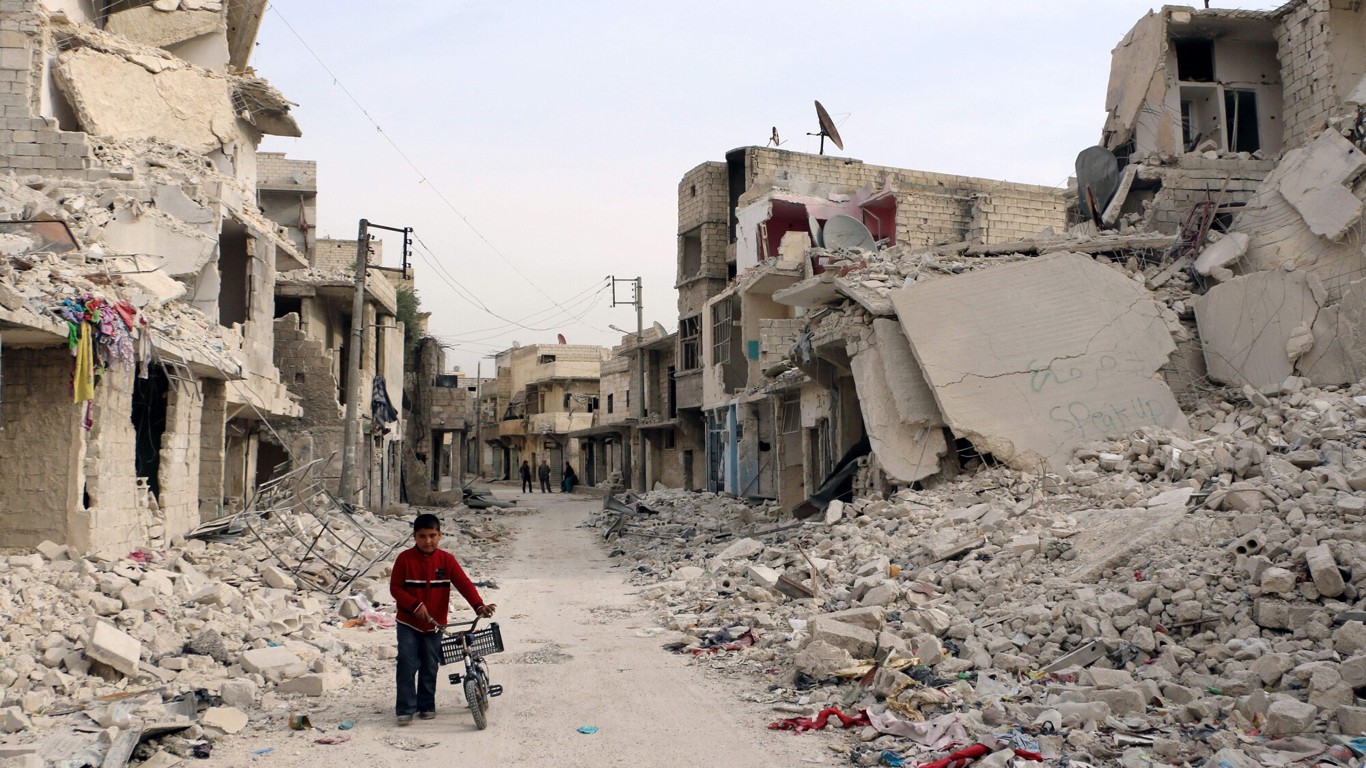
Fifteen years after the conflict began, Syria remains one of the world’s largest humanitarian crises. Today, 15.6 million people require humanitarian assistance, while millions remain displaced or are returning to communities devastated by years of conflict. Yet funding levels are now so limited that humanitarian organisations cannot reach everyone in need.
Although recent political developments have offered hope for Syria’s future, funding shortfalls are already having severe consequences. In May 2026, the UN World Food Programme was forced to halve the emergency food assistance, putting millions of Syrians at growing risk of hunger. Across the country, health facilities have been reduced, shelter needs remain widespread, and millions continue to face food insecurity. The 2026 Humanitarian Response Plan can only target 8.6 million of the 15.6 million people in need because funding is so limited. In practice, that means millions of people risk going without essential support.
Action For Humanity is working to maintain essential services. In 2026 alone, we reached 480,000 people across Syria; through health, education, WASH, livelihoods. For people receiving this support, the impact can be life-changing.
Sara, a five-year-old girl from Deir ez-Zor, received critical ear surgery at Hajin Hospital, supported by Action For Humanity. The intervention didn't just address her physical condition; it gave her the confidence her parents feared she might never have. Stories like Sara's show what sustained aid funding makes possible.
But support like this depends on sustained funding. With UK aid to Syria set to fall by 55% compared with pre-cut funding levels compared with pre-cut funding levels, humanitarian organisations face growing pressure to maintain essential services despite shrinking resources.
How has Yemen’s humanitarian situation been impacted by aid cuts?
Yemen provides another example of what happens when humanitarian needs continue to grow while funding declines. Years of conflict, economic instability and climate shocks have created one of the world’s most severe humanitarian crises.
Over 18 million people are experiencing acute food insecurity, while 22.3 million people need humanitarian assistance. The consequences of funding cuts are already visible. Nutrition services have fallen by up to 63%, with over 450 health facilities forced to close in the past year
Action For Humanity is working to address some of these needs through cash assistance, empowering local fishermen through specialist training and support programmes, and providing thousands with safe drinking water through water tanks, wells and solar-powered pumps.
For families, this support provides vital help when they need it most. Ahmed, a father of four, had struggled for years to provide food for his family. With Eid al-Adha approaching, he told us that he was worried he would not be able to afford meat for his children. Through our Qurbani distribution, Ahmed’s family received fresh meat in time for Eid, not only meeting an urgent food need but restoring a sense of inclusion for vulnerable families. Support like this provides immediate relief for vulnerable families, but as funding falls, fewer households can be reached.
Despite the scale of need, UK aid to Yemen is set to fall by almost 30% (£43.8 million). As funding falls, fewer resources are available to meet immediate needs, while long-term recovery efforts become increasingly difficult to sustain.
So why do we need UK aid funding to increase?
Syria and Yemen are just two examples of a wider global reality. When UK aid is cut, food assistance is reduced, health facilities close, water and sanitation services become harder to maintain, and fewer people can access the support they need. The consequences are felt most acutely by communities already facing conflict, poverty and displacement.
Humanitarian organisations are being asked to respond to record levels of need with increasingly limited resources, forcing difficult decisions about which programmes can continue and which communities can be reached.
MPs, policy experts and NGOs are calling on Andy Burnham to restore UK ODA to 0.7% of GNI. Reports indicate that Burnham’s government is looking for a road back to 0.7%, and while we welcome the moves, crises won’t wait while policy is ironed out.
Restoring UK aid to 0.7% is about more than returning to a spending target. It is about ensuring vulnerable communities can access healthcare, education, clean water, food assistance and opportunities to rebuild their lives. Without sustained investment, progress made over years risks being reversed, while the human cost of future crises continues to grow.
Help us continue providing essential support to children and families affected by humanitarian crises around the world.
Share Article